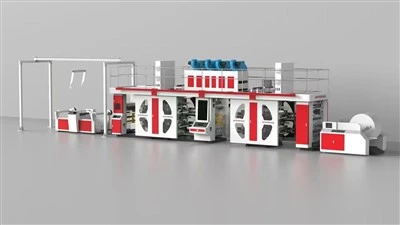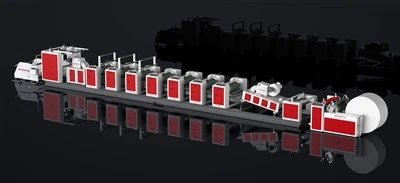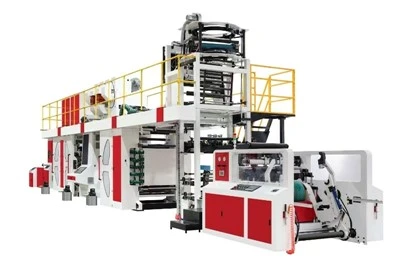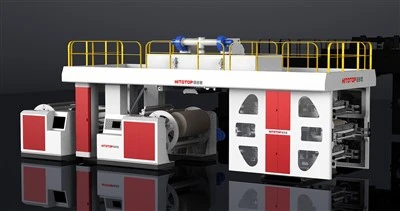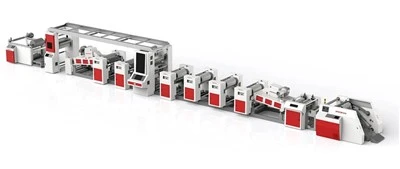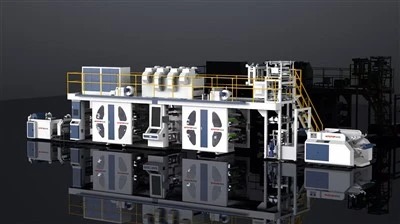

The core working principle of flexographic printing is the precise transfer of ink via an anilox roller, using a flexible relief printing plate to transfer the image onto the substrate. It is a type of letterpress printing, characterized by short ink path inking and light pressure printing. The specific process and principle are as follows:
1. Core Inking Principle (Short Ink Path System)
Flexographic printing presses employ a short ink path inking system using an anilox roller, which is simpler in structure than traditional offset and gravure printing:
Ink is pumped into a closed-cavity doctor blade system. As the anilox roller with cells rotates, the cells collect a measured amount of ink;
The doctor blades scrape away excess ink from the surface of the anilox roller, ensuring a uniform and precise amount of ink within the cells;
The anilox roller directly transfers the ink to the flexible relief printing plate on the printing cylinder, eliminating the need for the complex multi-stage inking components of traditional printing.
2. Transfer Printing Process
After ink supply is complete, the transfer process follows the pressure transfer logic:
The image areas of the printing plate are raised, evenly adhering to the ink; the non-image areas are recessed and do not hold ink;
Under zero or light pressure from the impression cylinder, the ink on the image areas of the printing plate is directly transferred to the surface of the substrate (paper, plastic film, corrugated cardboard, etc.), forming clear images;
After each color is printed, the ink is dried using hot air, ultraviolet light, or other devices before proceeding to the next color group for overprinting, ultimately completing multi-color printing.