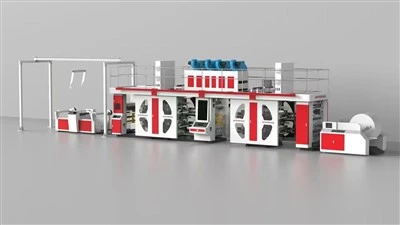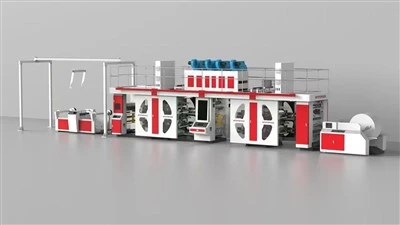


As a supplier of 6 - colour flexo printing machines, I've witnessed firsthand the crucial role of various components in ensuring high - quality printing results. One such component that often goes unnoticed but is of utmost importance is the doctor blade. In this blog, I'll delve into the functions of the doctor blade in a 6 - colour flexo printing machine.
Understanding Flexo Printing and Its Components
Flexo printing is a form of relief printing that uses flexible printing plates to transfer ink onto a substrate. A 6 - colour flexo printing machine allows for the application of up to six different colours in a single pass, enabling the creation of vivid and detailed printed materials. When it comes to the key parts of a flexo printing machine, we can refer to different types like the Flexographic Printing Machine. There are also specific models such as the Stack Flexo Press, Roll Fed Flexo Press, Central Impression Flexo, and Inline Flexo Printing Machine.
Main Functions of the Doctor Blade
1. Ink Metering
One of the primary functions of the doctor blade in a 6 - colour flexo printing machine is ink metering. In flexo printing, the anilox roll is responsible for transferring a controlled amount of ink to the printing plate. The doctor blade comes into contact with the anilox roll and scrapes off the excess ink from its surface. This ensures that only the ink contained within the cells of the anilox roll is available for transfer to the printing plate.


The precision of the ink metering process is critical for achieving consistent print quality across all six colours. If the doctor blade fails to remove the excess ink properly, it can lead to over - inking, which results in blurred images, poor colour definition, and wasted ink. On the other hand, if too much ink is removed, the printed areas may appear faint or incomplete. Therefore, the doctor blade needs to be carefully adjusted to maintain the optimal ink film thickness on the anilox roll.
2. Ink Distribution
In addition to metering the ink, the doctor blade also plays a role in ink distribution. As it scrapes the anilox roll, the doctor blade helps to evenly distribute the ink within the cells of the roll. This ensures that the ink is uniformly transferred to the printing plate and ultimately to the substrate.
In a 6 - colour flexo printing machine, consistent ink distribution is especially important as it helps to achieve accurate colour registration. Each colour station must apply the ink in the right amount and in the right place for the final printed image to look sharp and well - defined. The doctor blade contributes to this process by maintaining a uniform ink layer on the anilox roll's surface.
3. Controlling Ink Quality
The doctor blade also helps in controlling the quality of the ink. During the printing process, debris, dust, and dried ink particles can accumulate on the anilox roll. The doctor blade acts as a barrier to prevent these contaminants from reaching the printing plate. By scraping off the impurities along with the excess ink, the doctor blade ensures a clean and pure ink supply for the printing process.
This is crucial for maintaining the overall quality of the printed product. Contaminated ink can cause defects such as dots, streaks, or uneven colouring on the substrate. In a multi - colour flexo printing machine, any defect in one colour can significantly affect the overall appearance of the final print. Therefore, the doctor blade helps to minimize these risks and ensures that each of the six colours is printed with high quality.
Technical Features Affecting the Doctor Blade's Function
1. Blade Material
The choice of blade material has a significant impact on its function. Commonly used materials for doctor blades in flexo printing include metal (such as steel) and plastic. Metal blades are known for their durability and ability to withstand high - speed printing operations. They can effectively scrape off the excess ink and contaminants from the anilox roll. However, they may be more prone to causing wear on the anilox roll's surface over time.
Plastic blades, on the other hand, are softer and less likely to damage the anilox roll. They are often used in applications where the substrate requires a more delicate touch or when printing on high - quality materials. However, plastic blades may not be as effective in removing stubborn debris as metal blades.
2. Blade Angle and Pressure
The angle and pressure at which the doctor blade is applied to the anilox roll also affect its performance. The blade angle determines the amount of ink that is scraped off and the direction in which it is removed. A steeper blade angle generally results in more aggressive ink removal, while a shallower angle may leave a slightly thicker ink film on the anilox roll.
The pressure applied to the blade needs to be carefully adjusted. Too much pressure can cause excessive wear on the blade and the anilox roll, as well as potentially deform the blade. Insufficient pressure, on the other hand, may lead to inadequate ink metering and distribution. In a 6 - colour flexo printing machine, achieving the right balance of blade angle and pressure for each colour station is essential for consistent print quality.
Impact on Overall Printing Efficiency
An effectively functioning doctor blade contributes to the overall efficiency of a 6 - colour flexo printing machine. By reducing ink waste through precise metering, the cost of ink usage can be minimized. This is especially important in large - scale printing operations where the cost of ink can be a significant expense.
Moreover, a well - maintained doctor blade reduces the frequency of machine downtime for cleaning and maintenance. When the blade is able to remove contaminants and excess ink effectively, the anilox roll and other printing components remain cleaner for longer periods. This means fewer interruptions to the printing process and higher productivity.
Conclusion and Call to Action
In conclusion, the doctor blade in a 6 - colour flexo printing machine is a small yet extremely important component. Its functions of ink metering, distribution, and quality control are essential for achieving high - quality, consistent prints. Whether you are printing packaging materials, labels, or other products, a reliable doctor blade ensures that each of the six colours is vibrant, sharp, and accurately registered.
If you are in the market for a 6 - colour flexo printing machine or need to upgrade your existing equipment, we can provide you with high - quality machines and professional advice. Our machines are designed to optimize the performance of the doctor blade and other critical components, ensuring efficient and top - notch printing results. Don't hesitate to contact us to discuss your specific printing requirements and start a procurement negotiation.
References
- “Flexographic Printing Technology Handbook”.
- Academic journals on printing machinery and its components.