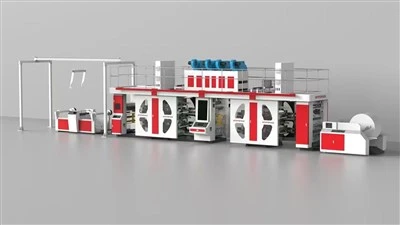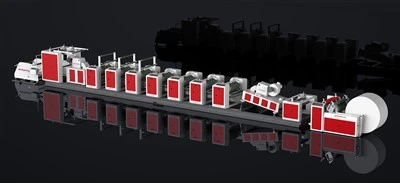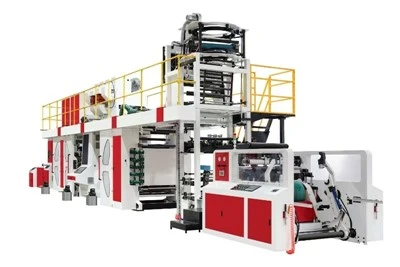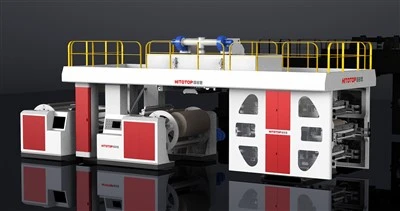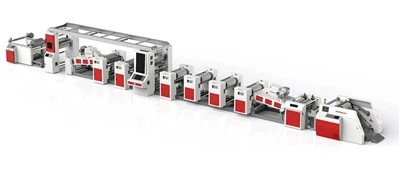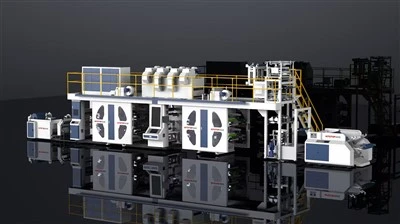

Core Existing Technologies
Automation Control Technology: Mainstream equipment adopts PLC automation control + touch screen interaction, equipped with dual frequency conversion motors and a magnetic powder clutch tension system, achieving fully automated operation, requiring only one operator; it supports automatic meter counting, alarm shutdown, and automatic fault detection function, allowing for timely shutdown to prevent equipment and product damage.
Precision Control Technology: Utilizing photoelectric/ultrasonic automatic edge correction devices to correct material edges, combined with a precision transmission control system, high-precision slitting can be achieved, with a minimum slitting width of 2mm. The slitting results in smooth, burr-free material edges, ensuring consistent dimensional specifications.

Structure and Process Technology: Employing a selectable circular/straight blade longitudinal cutting design, coupled with an automatic waste discharge system; the winding mechanism mostly adopts an air-expanding A/B dual-axis structure + frequency conversion speed-regulating traction roller, supporting synchronous operation. Some models allow for non-stop material change maintenance, improving continuous production efficiency.
Technological Development Directions
Precision and Intelligent Upgrades: Future developments will incorporate more advanced sensor and machine vision technologies to achieve dynamic adjustments and online quality control, further improving cutting precision.
Flexibility Optimization: Modular design and quick mold change functionality will become mainstream, better adapting to the needs of multi-variety, small-batch production, with a wider range of adaptability for cutting widths and material types.
Intelligent Operation and Maintenance: Combining IoT and big data technologies, equipment will add preventative maintenance and performance optimization functions, providing early warnings of faults and further reducing long-term operating costs.