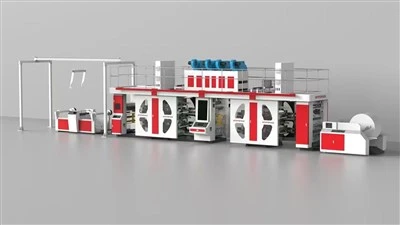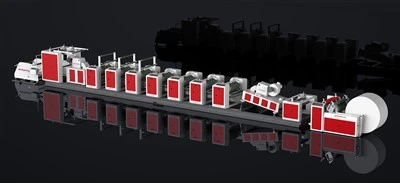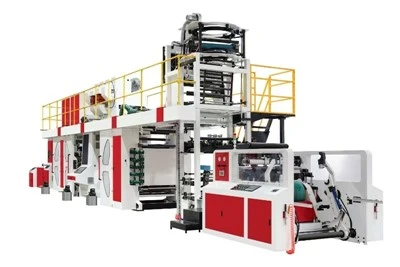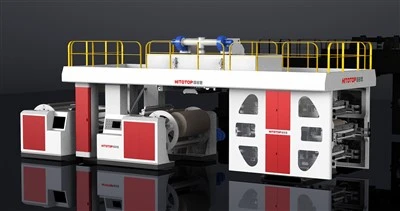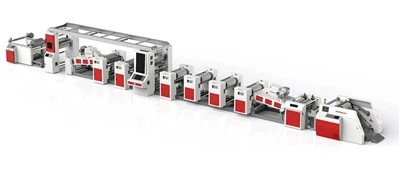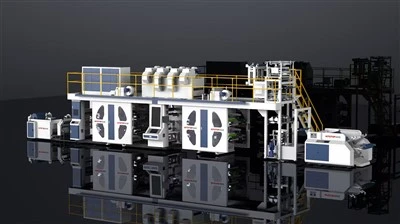

The main features of flexographic printing presses include the following:
1. Simple structure, convenient operation and maintenance: Flexographic printing presses are designed with practicality and convenience in mind, making operation and maintenance relatively easy. They offer a significant cost-performance advantage; the price of a flexographic printing press with the same functions is approximately 30-50% of that of an offset or gravure printing press.
2. Strong material adaptability: Flexographic printing presses can handle a wide range of materials, from 0.22mm thick plastic film to 10mm thick corrugated cardboard, making them suitable for a wide range of applications.
3. Low printing pressure, suitable for sensitive materials: Flexographic printing presses have a low printing pressure, only 19.6-39.2 N/cm², making them particularly suitable for substrates that cannot withstand excessive pressure, such as corrugated paper.
4. Low printing cost: Flexographic printing presses have lower machine prices, plate-making costs, and paper waste rates during the printing process. Compared to gravure printing, their production costs can be reduced by 30-50%.
5. Superior Print Quality: Utilizing a short ink path inking system with anilox rollers, quantitative control of film thickness is achieved. Breakthroughs in high-performance photosensitive resin plate technology enhance plate resolution and dot reproduction, enabling flexographic printing to achieve 300 lines per inch of color tonal gradation, with printing results comparable to offset and gravure printing.