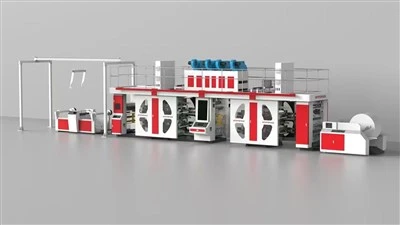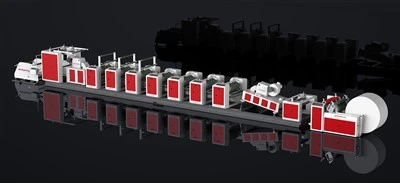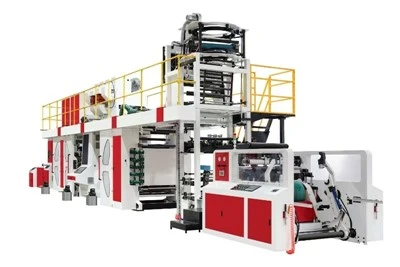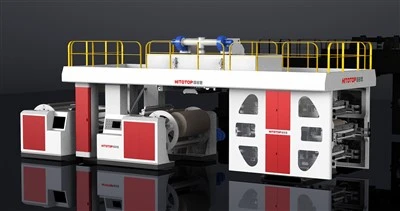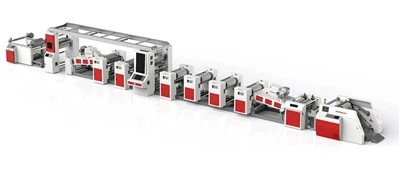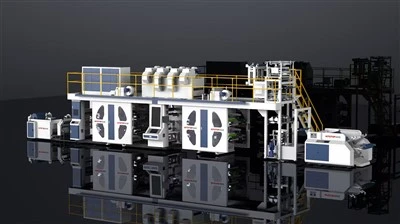

Judging the quality of a flexographic printing press requires a comprehensive evaluation from four key dimensions: core component configuration, automation stability, manufacturer's manufacturing process, and service. Specific judgment criteria are as follows:
1. Anilox Roller: The Core Foundation of Printing Quality
High-quality flexographic printing presses are preferentially equipped with ceramic anilox rollers, which are the core guarantee of high-quality printing:
Compared to traditional metal anilox rollers, ceramic anilox rollers have a longer service life, more precise ink delivery, better corrosion resistance, and can stably ensure color consistency, reducing color difference issues; The cell processing accuracy of the anilox roller should be carefully checked: the uniformity of cell volume directly determines the stability of ink transfer. If the cell volume deviation is large, problems such as uneven solid printing and dot gain are likely to occur.
2. Doctor Blade System: Affecting Printing Stability and Lifespan
The quality of the doctor blade system determines the ink volume stability under high-speed printing, which needs to be judged from the structure and materials:
Structural Type: For high-quality printing, a closed doctor blade system is preferred. This reduces ink evaporation, stabilizes ink viscosity and pH value, improves print quality consistency, and also improves the workshop environment. Open doctor blades are only suitable for low-speed, low-cost models.
Doctor Blade Material and Precision: High-quality doctor blades use thin-blade or wing-shaped blade designs, which have better adhesion to the anilox roller, cleaner ink scraping, and a longer service life. For high-precision printing, stainless steel or long-life wear-resistant doctor blades are preferred, which can reduce common problems such as doctor blade fuzzing, streaks, and drag lines.