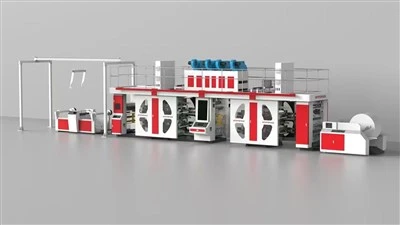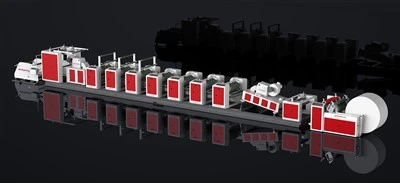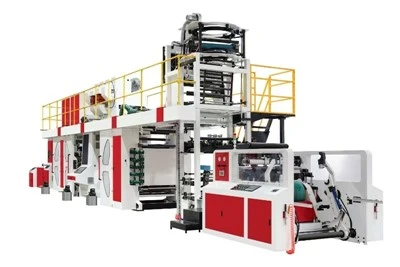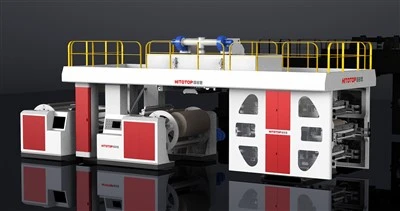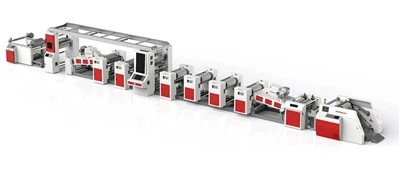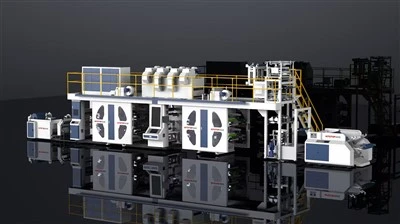

A flexographic printing press is a printing device that uses flexible printing plates and is widely used in packaging, labeling, stationery, and other printing industries.
The flexographic printing process includes the following steps:
1. Preparing the Printing Plate: Select a suitable flexible material, such as polyester or nylon, according to the printing requirements to make the printing plate. After processing, the printing plate has specific image and blank areas.
2. Inking: Apply an appropriate amount of ink to the printing plate, ensuring even coverage of the image areas. The viscosity and drying properties of the ink must be selected based on the printing material and requirements.
3. Plate Attaching: Attach the printing plate to the printing roller, ensuring a tight fit between the plate and the roller to prevent missed or blurred prints during printing.
4. Printing: The rotation of the printing roller transfers the image from the printing plate to the substrate. A uniform rotation speed must be maintained during printing to ensure print quality.
5. Drying: The ink on the printing substrate is rapidly dried using hot air, infrared radiation, or other methods, fixing the ink to the substrate and preventing it from peeling or discoloring.
6. Rewinding: The printed substrate is rolled up for subsequent processing or delivery to the customer.
7. Cleaning: The printing press is cleaned to remove residual ink and impurities, preparing it for the next printing.