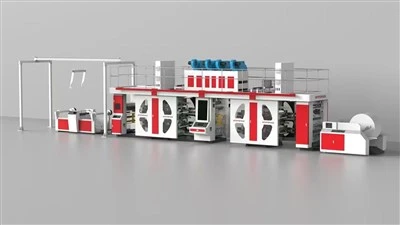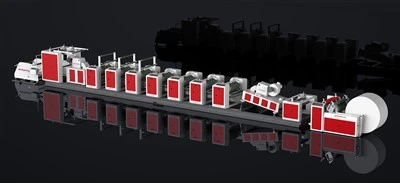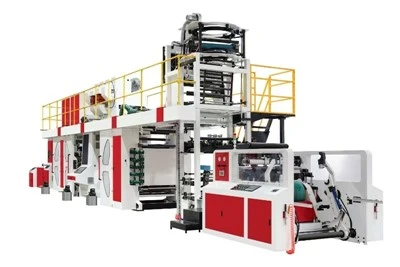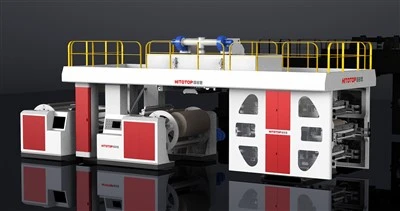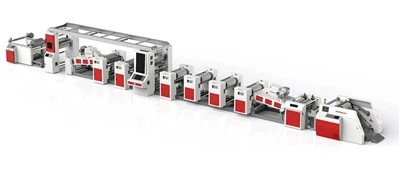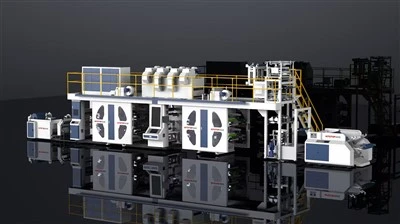

Flexographic printing presses are letterpress printing devices that use flexible relief printing plates. Their core function is to print patterns on various substrates using flexographic printing technology, meeting the diverse production needs of the packaging printing industry.
Core Printing Functions
Flexographic printing presses rely on flexible relief printing plates, precisely transferring environmentally friendly inks through anilox rollers, and then transferring the image onto the substrate with light pressure.
Their core features include adaptability to various materials, support for multi-color printing, and compliance with environmentally friendly production requirements:
Broad Substrate Compatibility: Can print on various substrates such as roll paper, sheet paper, plastic film, non-woven fabric, woven bags, and corrugated cardboard, covering all types of packaging materials from flexible packaging to hard boxes.
Multi-color and Double-sided Printing: Supports 1-8 colors (up to 10 colors) printing. Double-sided printing can also be achieved by adjusting the substrate transport path, meeting the needs of complex graphic designs.
Environmentally friendly printing production: Utilizing water-based or UV inks, VOC emissions are low, meeting green production standards and satisfying the safety and environmental requirements for food and pharmaceutical packaging.
High-speed automated production: Modern models achieve printing speeds up to 800 meters per minute, equipped with automatic color registration, automatic plate changing, and intelligent tension adjustment systems, resulting in high production efficiency and registration accuracy down to ±0.1mm.