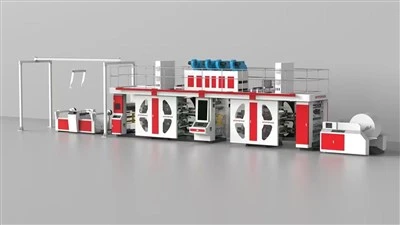


Hey there! I'm a supplier of flexographic machines, and today I wanna chat about a hot topic: Can a flexographic machine be automated?
First off, let's get a bit of background on flexographic machines. These bad boys are used in the printing industry for all sorts of stuff like packaging, labels, and more. They work by using flexible relief plates to transfer ink onto a substrate. And they've been around for a while, but technology has been evolving at a crazy pace, so the question of automation is a big one.
The Case for Automating Flexographic Machines
Automation in the manufacturing world has been a game - changer, and flexographic machines are no exception. There are several reasons why automating these machines makes a ton of sense.


1. Efficiency
One of the biggest advantages of automation is the boost in efficiency. An automated flexographic machine can run continuously without breaks. It doesn't get tired like a human operator, and it can perform tasks at a consistent speed. For example, when it comes to setting up the machine for a new print job, an automated system can quickly adjust the plate cylinders, anilox rollers, and ink levels. This means less downtime between jobs. Say you're running a high - volume production of labels. With an automated flexographic machine, you can churn out those labels much faster than with a manual setup.
2. Precision
Automation brings a level of precision that's hard to match with human operation. In flexographic printing, getting the right amount of ink, the perfect registration between colors, and accurate plate positioning are crucial. Automated systems use sensors and advanced control algorithms to ensure that every print is consistent. For instance, the 4 Color Flexo Printing Machine can be automated to maintain the exact color balance and registration across all four colors. This results in high - quality prints every time, which is super important for customers who demand top - notch products.
3. Safety
Manual operation of flexographic machines can be dangerous. There are moving parts, sharp edges, and the risk of ink spills. Automation reduces the need for human operators to be in close contact with these potentially hazardous elements. For example, an automated system can handle the loading and unloading of substrates, minimizing the risk of accidents. Workers can focus on monitoring the process from a safe distance, which is a win - win for everyone.
How Automation Works in Flexographic Machines
So, how exactly does automation work in these machines? Well, there are a few key components.
1. Sensors
Sensors play a vital role in automated flexographic machines. They can detect things like the position of the substrate, the amount of ink on the anilox roller, and the temperature and humidity in the printing environment. For example, a sensor can measure the thickness of the substrate and adjust the pressure of the printing cylinders accordingly. This ensures that the print quality remains consistent, regardless of variations in the material.
2. Control Systems
Control systems are the brains of the automation process. They take the data from the sensors and use it to make adjustments to the machine. These systems can be programmed to follow specific printing recipes. So, if you have a particular job that requires a certain ink density and registration, the control system can execute it perfectly. Modern control systems are often based on computer software, which can be easily updated to improve performance.
3. Robotics
Robotics are becoming increasingly common in automated flexographic machines. Robots can handle tasks like loading and unloading substrates, changing plates, and cleaning the machine. For example, a robotic arm can quickly and accurately change the flexographic plates when switching between print jobs. This not only saves time but also reduces the risk of errors.
Examples of Automated Flexographic Machines
There are some really cool automated flexographic machines out there.
The 6 Colour Flexo Printing Machine is a great example. It's designed with automation in mind. It can automatically adjust the ink levels for each of the six colors, ensuring a perfect color match every time. The machine also has an automated registration system that keeps the colors in alignment, even during high - speed printing.
The CI Flexo Printing Press and CI Flexographic Printing Press are also highly automated. These central impression flexo presses use advanced control systems and sensors to optimize the printing process. They can handle a wide range of substrates and are ideal for high - volume production.
The Ci Printing Machine is another option. It offers automated features like automatic plate mounting and ink circulation. This makes it easier to set up and run, especially for operators who are new to flexographic printing.
Challenges of Automating Flexographic Machines
Of course, automating flexographic machines isn't all sunshine and rainbows. There are some challenges that need to be addressed.
1. Cost
Automation can be expensive. The initial investment in sensors, control systems, and robotics can be quite high. Smaller printing shops may find it difficult to afford the upfront costs. However, it's important to look at the long - term benefits. Over time, the increased efficiency and productivity can offset the initial investment.
2. Complexity
Automated systems are more complex than manual machines. They require specialized knowledge to operate and maintain. Printing companies may need to invest in training their staff or hire technicians with the right skills. This can add to the overall cost of implementing automation.
3. Adaptability
Flexographic printing often involves working with different types of substrates, inks, and print jobs. Automated systems need to be able to adapt to these variations. For example, a system that works well with paper may not work as effectively with plastic. Developing automated machines that can handle a wide range of materials and jobs is a challenge.
Conclusion
So, can a flexographic machine be automated? The answer is a resounding yes! Automation offers many benefits, including increased efficiency, precision, and safety. There are already some great automated flexographic machines on the market, like the ones I mentioned earlier.
However, there are also challenges to overcome, such as cost, complexity, and adaptability. But with the rapid advancement of technology, these challenges are likely to be addressed in the future.
If you're in the market for a flexographic machine and are considering automation, I'd love to have a chat with you. We can discuss your specific needs and see how our machines can meet them. Whether you're a small - scale printer or a large - scale production facility, we've got solutions for you. Don't hesitate to reach out and start the conversation about how automation can take your printing business to the next level.
References
- "Flexographic Printing Technology" by industry experts
- Research papers on automation in manufacturing from leading academic journals