

What is the Drying Time of the Prints on Non Woven Fabric Using a Printer?
As a supplier of Non Woven Fabric Printers, I've received numerous inquiries regarding the drying time of prints on non woven fabric. Understanding this aspect is crucial for businesses involved in printing on non woven materials, as it directly impacts production efficiency, quality, and overall cost. In this blog, I'll delve into the factors that influence the drying time and provide some insights based on our experience in the industry.
Factors Affecting Drying Time
Ink Type
The type of ink used plays a significant role in determining the drying time. There are different types of inks available for non woven fabric printing, such as water - based, solvent - based, and UV - curable inks.
Water - based inks are environmentally friendly and are commonly used in non woven fabric printing. They dry by evaporation, which means the water in the ink needs to evaporate for the print to dry. The drying time of water - based inks can be relatively long, especially if the humidity is high. However, they are a popular choice due to their low odor and safety.
Solvent - based inks dry faster than water - based inks because the solvents evaporate more quickly. But they have some drawbacks, such as higher volatility and potential environmental and health risks.
UV - curable inks are a different story. These inks dry almost instantaneously when exposed to UV light. This makes them ideal for high - speed printing operations on non woven fabric. With UV - curable inks, the printer can be equipped with a UV lamp, and as soon as the ink is printed, it passes under the lamp and cures immediately.
Printing Thickness
The thickness of the ink layer on the non woven fabric also affects the drying time. A thicker layer of ink will take longer to dry compared to a thinner layer. This is because there is more ink that needs to evaporate or cure. For example, if you are printing a bold and solid color, the ink layer will be thicker, and it will take more time for the print to dry.
Fabric Properties
The properties of the non woven fabric itself can influence the drying time. Non woven fabrics have different porosity levels. A more porous fabric allows the ink to penetrate more easily, which can speed up the drying process. On the other hand, a less porous fabric may cause the ink to sit on the surface, increasing the drying time. Additionally, the type of fibers in the non woven fabric can also have an impact. Some fibers may absorb the ink better than others, affecting the drying rate.
Environmental Conditions
The temperature and humidity of the printing environment are important factors. Higher temperatures generally speed up the drying process, as they increase the rate of evaporation. In contrast, high humidity can slow down the drying of water - based inks because the air is already saturated with moisture, making it more difficult for the water in the ink to evaporate.
Drying Time Estimates
Based on our experience, the drying time can vary widely depending on the factors mentioned above.
For water - based inks on a standard non woven fabric under normal environmental conditions (around 25°C and 50% humidity), a thin layer of ink may dry in 10 - 30 minutes, while a thicker layer could take up to an hour or more.
Solvent - based inks can dry in a matter of minutes, typically 5 - 15 minutes for a thin layer, and 15 - 30 minutes for a thicker layer.
UV - curable inks, as mentioned earlier, dry almost instantly. Once the ink is exposed to the UV light, it cures within seconds, allowing for immediate handling of the printed non woven fabric.
Impact on Production
The drying time has a direct impact on the production process. Longer drying times mean that the printed non woven fabric needs to be stored for a longer period before it can be further processed or packaged. This can lead to increased storage space requirements and slower production rates.
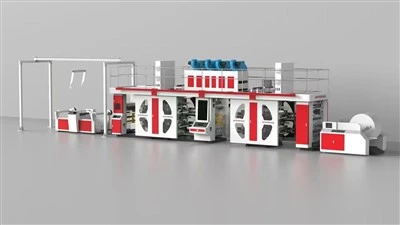
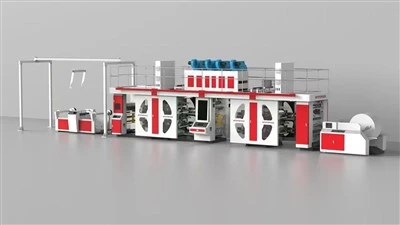
For high - volume production, using UV - curable inks and printers equipped with UV curing systems can significantly improve efficiency. These High Speed Flexo Printers are designed to handle the fast - drying nature of UV - curable inks and can keep the production line moving at a high pace.
Choosing the Right Printer
When it comes to non woven fabric printing, choosing the right printer is essential. We offer a range of printers, including Flexo Printing Machine 6 Colour, High Speed Flexo Printing Machine, CI Flexographic Printing Press, and Ci Printing Machine.
These printers are designed to work with different types of inks and can be customized to meet the specific needs of your production. For example, if you are using UV - curable inks, our printers can be equipped with high - quality UV curing systems to ensure fast and efficient drying.
Conclusion
The drying time of prints on non woven fabric using a printer is influenced by multiple factors, including ink type, printing thickness, fabric properties, and environmental conditions. Understanding these factors can help you make informed decisions about the type of ink and printer to use in your production process.
If you are in the market for a non woven fabric printer and want to optimize your production based on the drying time requirements, we are here to help. Our team of experts can provide you with detailed information and guidance on choosing the right printer and ink combination for your specific needs. Contact us to start a discussion about your non woven fabric printing requirements and take your production to the next level.


References
- Smith, J. (2018). "Advances in Non Woven Fabric Printing". Journal of Textile Printing Technology.
- Brown, A. (2019). "Ink Drying Mechanisms in Printing Processes". Printing Industry Review.
- Green, M. (2020). "Environmental Factors Affecting Print Drying". Environmental Science in Printing.