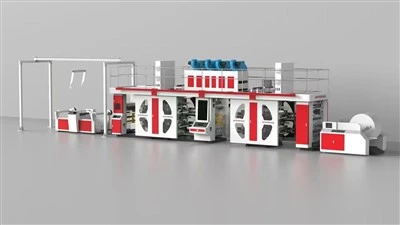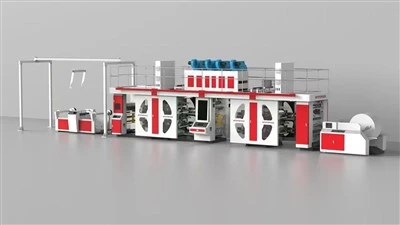


The nip pressure in a Roll Fed Flexo Press plays a crucial and multi - faceted role in the printing process. As a supplier of Roll Fed Flexo Presses, I have witnessed firsthand how this seemingly simple parameter can have a profound impact on the quality, efficiency, and overall performance of the printing operation.
Understanding Nip Pressure
Nip pressure refers to the force applied between two rolls in a flexo press, typically the impression roll and the plate cylinder. This pressure is essential for transferring the ink from the anilox roll to the printing plate and then from the printing plate to the substrate. In a Roll Fed Flexo Press, the substrate is fed continuously in a roll - to - roll manner, and the nip pressure ensures a consistent and accurate transfer of the ink pattern.
The nip pressure is not a one - size - fits - all value. It needs to be carefully adjusted based on several factors, including the type of substrate, the ink viscosity, the design of the printing plate, and the desired print quality. For example, a thicker substrate may require a higher nip pressure to ensure proper ink transfer, while a thinner substrate may need a lower pressure to avoid damage.
Impact on Print Quality
One of the most significant roles of nip pressure is its impact on print quality. A well - adjusted nip pressure can result in sharp, clear, and consistent prints. When the nip pressure is too low, the ink transfer may be incomplete, leading to faint or patchy prints. The ink may not fully adhere to the substrate, causing issues such as missing dots or poor color density.
On the other hand, if the nip pressure is too high, it can cause several problems. The excessive pressure can distort the printing plate, leading to blurred images and inaccurate registration. It can also squeeze the ink out of the cells of the anilox roll, resulting in over - inking and a messy print. Additionally, high nip pressure can damage the substrate, especially if it is a delicate or thin material.
To achieve the best print quality, it is essential to find the optimal nip pressure. This often involves a process of trial and error, where different pressure settings are tested on a small sample of the substrate. Modern Roll Fed Flexo Presses are equipped with advanced pressure control systems that allow for precise adjustment of the nip pressure. These systems can monitor and adjust the pressure in real - time, ensuring consistent print quality throughout the production run.
Influence on Ink Transfer
Ink transfer is a critical aspect of flexographic printing, and nip pressure plays a key role in this process. The anilox roll is responsible for metering the ink and transferring it to the printing plate. The nip pressure between the anilox roll and the printing plate determines how much ink is transferred.
A proper nip pressure ensures that the ink is evenly distributed on the printing plate. The pressure should be sufficient to fill the cells of the anilox roll with ink and transfer it to the plate without squeezing out too much ink. Once the ink is on the printing plate, the nip pressure between the printing plate and the substrate determines how well the ink is transferred to the substrate.
The viscosity of the ink also affects the ink transfer process. Higher - viscosity inks may require a higher nip pressure to ensure proper transfer, while lower - viscosity inks may need a lower pressure. As a Roll Fed Flexo Press supplier, we often provide guidance to our customers on how to adjust the nip pressure based on the type of ink they are using.
Effect on Substrate Handling
Nip pressure also has an impact on substrate handling in a Roll Fed Flexo Press. The pressure between the rolls can affect the tension of the substrate as it passes through the press. If the nip pressure is too high, it can cause excessive tension on the substrate, leading to stretching or wrinkling. This can result in misregistration and poor print quality.
Conversely, if the nip pressure is too low, the substrate may not be held firmly enough between the rolls, causing it to slip or move out of position. This can also lead to registration issues and inconsistent prints. Maintaining the right nip pressure is crucial for ensuring smooth and stable substrate handling.


Role in Press Efficiency
In addition to print quality and substrate handling, nip pressure can also affect the efficiency of a Roll Fed Flexo Press. A well - adjusted nip pressure can reduce the amount of waste generated during the printing process. When the nip pressure is optimized, there is less need for reprints due to poor print quality, which saves time and resources.
Moreover, proper nip pressure can also increase the speed of the press. If the pressure is set correctly, the ink transfer is more efficient, allowing the press to run at a higher speed without sacrificing print quality. This can significantly increase the production output and improve the overall profitability of the printing operation.
Adjusting Nip Pressure
As a Roll Fed Flexo Press supplier, we provide our customers with detailed instructions on how to adjust the nip pressure. Most modern presses are equipped with pressure gauges or sensors that allow operators to monitor the pressure accurately. The adjustment process typically involves turning screws or using hydraulic or pneumatic systems to increase or decrease the pressure between the rolls.
It is important to note that nip pressure adjustment should be done carefully and gradually. Sudden changes in pressure can cause damage to the rolls, the printing plate, or the substrate. Operators should also be aware of the interdependence of different parameters, such as ink viscosity, substrate type, and press speed, when adjusting the nip pressure.
Conclusion
In conclusion, the nip pressure in a Roll Fed Flexo Press is a critical parameter that affects print quality, ink transfer, substrate handling, and press efficiency. As a supplier, we understand the importance of providing our customers with high - quality presses that allow for precise adjustment of the nip pressure. We also offer training and support to help our customers optimize the use of their presses.
If you are in the market for a Roll Fed Flexo Press, we have a range of options to meet your needs. Our Ci Flexo Machine offers advanced features for precise nip pressure control. The 6 Colour Flexo Printing Machine provides high - quality multi - color printing with adjustable nip pressure. The Central Impression Flexo offers excellent ink transfer and print quality through optimal nip pressure management. Our Flexographic Printing Machine and Unit Type Printing Machine also come with reliable nip pressure adjustment systems.
If you are interested in learning more about our Roll Fed Flexo Presses or have any questions about nip pressure and its role in the printing process, we encourage you to contact us for a detailed discussion and to explore the possibility of a purchase. We are committed to providing you with the best solutions for your printing needs.
References
- Smith, J. (2018). Flexographic Printing Technology. Printing Press Publications.
- Johnson, A. (2020). The Science of Ink Transfer in Flexo Presses. Journal of Printing Science.
- Brown, R. (2019). Substrate Handling in Roll Fed Printing. Printing Industry Journal.