
Pre-press Plate Making Stage
This is the fundamental step in ensuring print quality. Modern mainstream flexographic printing uses digital direct-to-plate (DTP) technology:
Preparing a photosensitive resin flexographic printing plate, the plate is placed directly on the flexographic CTP plate-making machine. Image data is transmitted to a laser, which ablates the black photosensitive layer on the plate surface to form the corresponding image. After exposure, development is performed, eliminating the traditional film preparation process, reducing dot gain issues, and reproducing finer dot tones. If traditional plate making is used, film must be made first, followed by plate exposure and development.
Printing Processing Stage
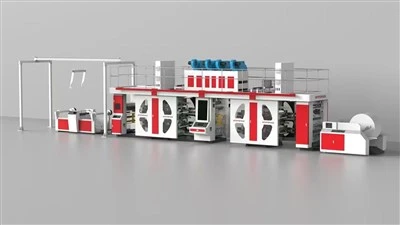
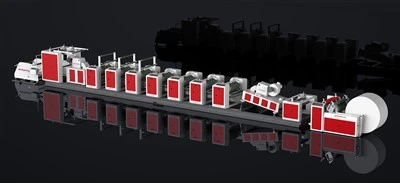
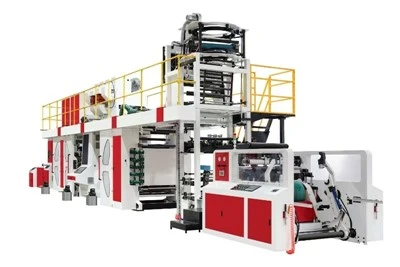
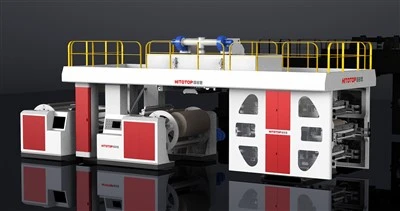
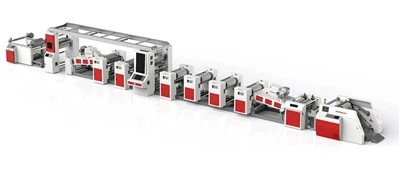
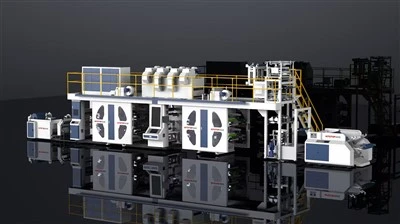
Flexographic printing presses use a short ink path inking system. The core process is as follows:
Unwinding and Feeding: The printing material (paper, corrugated cardboard, plastic film, etc.) is output from the unwinding mechanism. Traction and tension control ensure stable paper feeding.
Ink Transfer: Ink is pumped into the ink chamber of a closed doctor blade system. The cells of the anilox roller carry a measured amount of ink. After the doctor blade removes excess ink, the ink is evenly transferred to the flexible image area of the printing plate cylinder.
Impression Transfer: Under zero or light pressure, the ink on the image area of the printing plate is transferred to the substrate surface, forming a clear image.
Drying and Curing: After each color is printed, the ink is dried using hot air, infrared, or ultraviolet light to prevent mixing between different color groups. Water-based inks are dried with hot air, while UV inks are cured with ultraviolet light.
Multicolor Printing: Multiple printing color groups are printed sequentially using the above process. An automated registration system ensures accurate multicolor printing. Modern equipment can achieve AI-based automatic parameter setting and automatic registration control, with an accuracy of ±0.1mm.