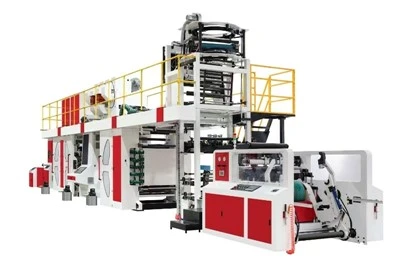


Hey there! I'm working with a Slitting Rewinding Machine supplier, and I've seen firsthand how these machines play a huge role in various industries. Today, I'm gonna break down the differences between center - driven and surface - driven Slitting Rewinding Machines.
Let's start with a bit of background. Slitting Rewinding Machines are used to cut large rolls of materials like paper, plastic, or fabric into smaller, more manageable rolls. They're super important in packaging, printing, and many other sectors. If you're interested in learning more about these general machines, you can check out this Slitting Rewinding Machine.
Center - Driven Slitting Rewinding Machines
Okay, so let's dig into what makes center - driven machines unique. In a center - driven setup, the rewinding shaft is powered directly from the center. Think of it like a record player, where the center spindle rotates to make the record spin.
One of the big advantages of center - driven machines is the precision they offer. Since the power is applied directly at the center of the rewinding roll, it can maintain a high level of tension control. This is really crucial when dealing with materials that are sensitive to tension variations, like thin plastics or delicate papers.
For example, in the packaging industry, when you're slitting and rewinding thin film for food packaging, you need to make sure the tension is just right. If the tension is too high, the film might tear; if it's too low, the rewound roll might be loose and not uniform. Center - driven machines can handle these challenges really well, ensuring that each roll is wound tightly and evenly.
Another plus is the consistency of winding speed. With a center - driven machine, you can set a specific speed, and it will maintain that speed throughout the entire process. This is great for mass - production environments where you need to churn out a large number of rolls with the same quality.
However, there are some downsides too. Center - driven machines can be a bit more complex and expensive to set up and maintain. They require precision engineering to ensure that the center drive system is working smoothly. Also, changing the size of the rolls can be a bit more involved, as you might need to adjust the center drive mechanism to accommodate different diameters.
If you're in an industry where precision and consistent winding are top priorities, and you're willing to invest in a high - end solution, a center - driven PP Woven Valve Bag Slitter Rewinder might be a great fit for you.
Surface - Driven Slitting Rewinding Machines
Now, let's switch gears and talk about surface - driven machines. In a surface - driven setup, the rewinding roll is driven by friction against a rotating surface, usually a large drum.
One of the main advantages of surface - driven machines is their simplicity. They're generally easier to operate and maintain compared to center - driven machines. You don't have to worry about all the complex center drive mechanisms. This makes them a popular choice for small - to medium - sized businesses that might not have a lot of technical expertise on staff.
Surface - driven machines are also great for handling irregular or larger - diameter rolls. Since the driving force is applied on the surface of the roll, they can adapt more easily to different roll sizes and shapes. For example, if you're working with bulky fabric rolls or large - diameter paper rolls, a surface - driven machine can handle them without much hassle.
In addition, these machines are often more affordable upfront. This is a big plus for businesses on a tight budget. You can get a decent surface - driven High Speed Slitting Machine for a lower cost compared to a center - driven one.
But, surface - driven machines do have their limitations. Tension control is a bit trickier. Because the driving force is on the surface, it can be harder to maintain a consistent tension throughout the winding process. This might lead to some variations in the tightness of the rewound rolls. Also, the winding speed can be affected by factors like the friction between the roll and the driving surface, so it's not as consistent as in center - driven machines.
Comparison in Different Industries
Let's take a look at how these two types of machines stack up in different industries.
In the printing industry, center - driven machines shine. When printing on high - quality paper or film, precision is key. You need to make sure that the slitting and rewinding process doesn't damage the printed image. The precise tension control and consistent winding speed of center - driven machines make them ideal for this. For instance, a High Speed Flexo Printing Slitting Machine with a center - driven system can ensure that the printed rolls are of the highest quality.
On the other hand, in the textile industry, surface - driven machines are more commonly used. Textiles come in all sorts of sizes and textures, and surface - driven machines can easily adapt to these variations. They can handle large, bulky fabric rolls without the need for complex adjustments.
Which One Should You Choose?
So, how do you decide between a center - driven and a surface - driven Slitting Rewinding Machine? It really depends on your specific needs.
If you're dealing with high - value, delicate materials and need the utmost precision in tension control and winding speed, a center - driven machine is the way to go. It might cost more upfront and require more maintenance, but the quality of the finished product will be worth it.
If you're on a budget, have a smaller operation, or need to handle a variety of roll sizes and shapes, a surface - driven machine is a great option. It's simpler, more affordable, and can still get the job done for many applications.
And hey, if you're in the valve bag business, you might want to check out our Valve Bag Printing Slitting Machine. It can be configured as either center - driven or surface - driven depending on your requirements.
If you're still not sure which machine is right for you, or you have any questions about our Slitting Rewinding Machines, don't hesitate to reach out. We're here to help you make the best choice for your business. Whether it's for a small - scale operation or a large - scale production line, we've got the expertise to guide you through the process. So why not start a conversation today and see how we can meet your slitting and rewinding needs?


References
- Industry reports on Slitting Rewinding Machines
- Technical manuals of center - driven and surface - driven Slitting Rewinding Machines
- Interviews with industry experts in packaging, printing, and textile sectors