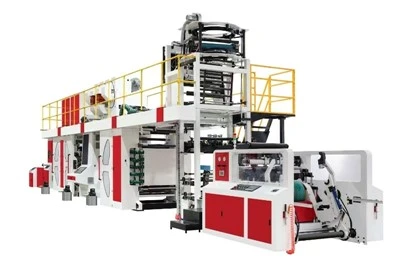


Hey there, fellow printing enthusiasts! As a supplier of Flexographic Printing Machine, I've seen firsthand how crucial it is to choose the right anilox roll for your flexo printing machine. In this blog post, I'm gonna share some tips and tricks on how to make that decision, so you can get the best results from your prints.
What's an Anilox Roll Anyway?
Before we dive into the nitty - gritty of choosing the right anilox roll, let's quickly go over what it is. An anilox roll is a key component in flexographic printing. It's a cylinder with tiny cells engraved on its surface. These cells hold and transfer the ink from the ink fountain to the printing plate. The size, shape, and density of these cells play a huge role in determining the quality and consistency of your prints.
Factors to Consider When Choosing an Anilox Roll
1. Line Screen
The line screen of an anilox roll refers to the number of cells per linear inch (cpi). A higher line screen means more cells per inch, which can result in a finer print. For high - resolution images and detailed designs, you'll want a roll with a high line screen, like 800 - 1200 cpi. On the other hand, if you're printing solid colors or large areas of ink coverage, a lower line screen, say 200 - 400 cpi, might be more suitable.
For example, if you're using a Roll Fed Flexo Press to print a detailed label with small text and intricate graphics, a high - line - screen anilox roll will help you achieve sharp and clear images.
2. Cell Volume
Cell volume is another important factor. It's measured in billion cubic microns per square inch (BCM). The cell volume determines how much ink the anilox roll can hold and transfer. A higher cell volume means more ink is transferred, which is great for printing solid colors and opaque inks. But if you're printing with transparent inks or need a light ink coverage, a lower cell volume is the way to go.
Let's say you're using an Inline Flexo Printing Machine to print a brochure with a lot of solid - color backgrounds. You'll probably want an anilox roll with a relatively high cell volume to ensure full and even ink coverage.
3. Ink Type
The type of ink you're using also affects your anilox roll choice. Different inks have different viscosities and flow characteristics. For example, water - based inks are generally less viscous than solvent - based inks. If you're using water - based inks, you might need an anilox roll with a higher cell volume to compensate for the lower viscosity.
On the other hand, if you're using UV inks, which are thicker and more viscous, a roll with a lower cell volume can work well. When using a Flexo Printing Press, make sure to take the ink type into account when selecting the anilox roll.
4. Substrate
The substrate you're printing on matters too. Different substrates have different absorbency levels. For example, porous substrates like paper will absorb more ink than non - porous substrates like plastic or metal. If you're printing on a porous substrate, you might need an anilox roll with a higher cell volume to ensure enough ink is transferred.
Conversely, if you're using a non - porous substrate, a lower cell volume might be sufficient. When using a Flexo Digital Printing Machine, the substrate type should be a key consideration in your anilox roll selection.
5. Printing Process
The printing process itself can influence your anilox roll choice. For example, if you're doing high - speed printing, you need an anilox roll that can transfer ink quickly and evenly. A roll with a proper cell design and surface finish can help with this. If you're doing multi - color printing, you might need different anilox rolls for each color to achieve the right color balance.


How to Test and Evaluate Anilox Rolls
Once you've narrowed down your choices based on the factors above, it's a good idea to test the anilox rolls. You can do this by running some test prints on your flexographic printing machine. Look at the print quality, ink coverage, and color accuracy. Pay attention to any issues like streaking, uneven ink distribution, or color variations.
If possible, compare the test prints side by side. This will give you a better idea of which anilox roll performs the best for your specific printing needs. You can also measure the ink density using a densitometer to get more precise data on the ink transfer.
Maintenance and Care of Anilox Rolls
Choosing the right anilox roll is just the first step. Proper maintenance and care are essential to ensure its longevity and performance. After each print run, clean the anilox roll thoroughly to remove any ink residue. You can use a specialized anilox cleaner and a soft brush.
Store the anilox roll in a clean and dry environment to prevent corrosion and damage. Regularly inspect the roll for any signs of wear or damage, such as chipped cells or scratches on the surface. If you notice any issues, address them promptly to avoid affecting the print quality.
Conclusion
In conclusion, choosing the right anilox roll for your flexographic printing machine is a multi - faceted decision. You need to consider factors like line screen, cell volume, ink type, substrate, and the printing process. By taking the time to understand these factors and testing different rolls, you can find the anilox roll that will give you the best print results.
If you're in the market for a flexographic printing machine or need more advice on anilox roll selection, don't hesitate to reach out. We're here to help you make the right choices for your printing business. Whether you're a small - scale printer or a large - scale production facility, we've got the expertise and products to meet your needs. Contact us today to start a discussion about your printing requirements.
References
- "Flexographic Printing Technology" by Joe Gold
- "The Anilox Handbook" by John Smith